
Understanding Your Place in the Five Levels Of Leadership
Explore Maxwell's Five Levels of Leadership and understand your place in the model

John C Maxwell’s Five Levels of Leadership offers a roadmap for anyone aspiring to become a truly influential leader. It highlights that leadership is not about a title; it is about the level of influence you hold over others. As you ascend this “leadership staircase”, your ability to inspire and motivate people grows significantly.
The Core Principle: Building Your Leadership Influence
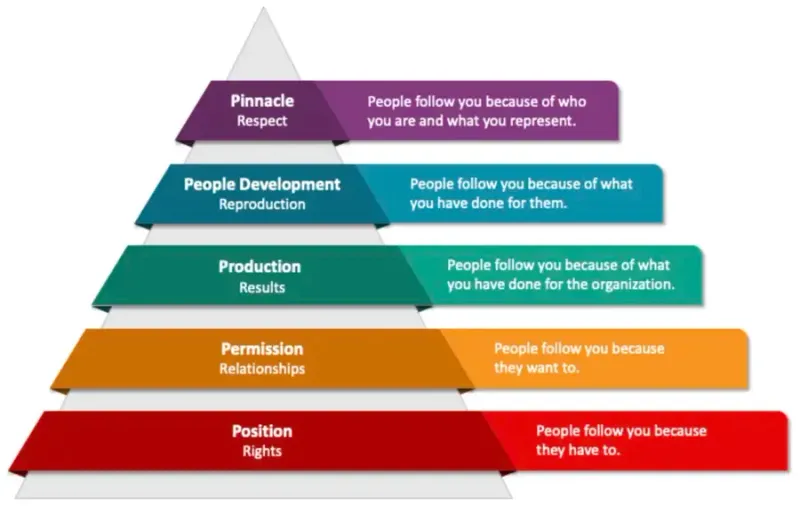
The Five Levels of Leadership framework highlights the crucial difference between authority and influence. A leader with a high position might have followers who comply out of obligation, but a truly influential leader inspires dedication and loyalty. In this article we are going to explore each level in detail, along with examples to illustrate the concept:
Level 1: Position - “People Follow Because They Have To”
This is the foundation of the model. Leaders at this level rely solely on their designated authority within a hierarchy. Think of a newly appointed team leader who assigns tasks based on job descriptions. Team members comply due to the leader’s position, not necessarily because of their leadership skills.
Level 2: Permission - “People Follow Because They Want To”
Here, leaders build relationships with their followers. They focus on creating a positive and trusting environment, fostering a sense of camaraderie that motivates people to follow willingly. Imagine a teacher who creates a supportive classroom environment. Students go the extra mile on assignments because they respect and enjoy learning from their teacher.
Level 3: Production - “People Follow Because of What You Have Done for the Organization”
Leaders at this level are results-oriented. They are skilled at getting things done and have a proven track record of success. People follow because they see the leader’s ability to deliver positive outcomes. A sales manager who consistently exceeds team targets exemplifies this level. The sales team is motivated by the manager’s proven strategies and leadership in achieving results.
Level 4: People Development - “People Follow Because of What You Have Done for Them Personally”
This level goes beyond just achieving results. Leaders here invest in their followers’ growth, providing mentorship and opportunities for development. Think of a coach who identifies and nurtures talent in young athletes. The athletes are dedicated to the coach because they recognize the positive impact on their skills and confidence.
Level 5: Pinnacle - “People Follow Because of Who You Are and What You Represent”
This is the summit of leadership. Leaders at this level have earned the highest level of respect and admiration. They inspire not just with their actions, but with their character and values. Their influence transcends their immediate circle, leaving a lasting impact. Leaders like Nelson Mandela embody this level, inspiring not just their followers, but the entire nation with their unwavering commitment to a cause.
Moving Up the Leadership Staircase
Maxwell emphasises that the levels build upon one another. You can’t skip steps, and strong foundations are crucial for reaching the top. Here’s how a leader can progress:
- Focus on Self-Development: Continuously work on your communication, interpersonal skills, and emotional intelligence.
- Invest in Relationships: Build trust and rapport with your followers by actively listening and showing genuine care.
- Deliver Results: Set clear goals and demonstrate your ability to achieve them.
- Empower Others: Delegate tasks, provide opportunities for growth, and celebrate your team’s successes.
- Lead by Example: Live by your values and embody the qualities you admire in leaders.
By focusing on these aspects, you can ascend the leadership staircase, leaving a lasting impact on those you lead. Remember, leadership is a lifelong journey, and Maxwell’s 5 Levels provide a valuable framework for navigating your path to becoming a truly influential leader.
So where do you believe that you place currently in this model? What do you think you could do to build on your current position and move up the ladder?
The 5 Levels of Leadership
John C. Maxwell is a #1 New York Times bestselling author, speaker, coach and leader who has sold more than 33 million books.
John C. Maxwell
New York Times Bestselling Author